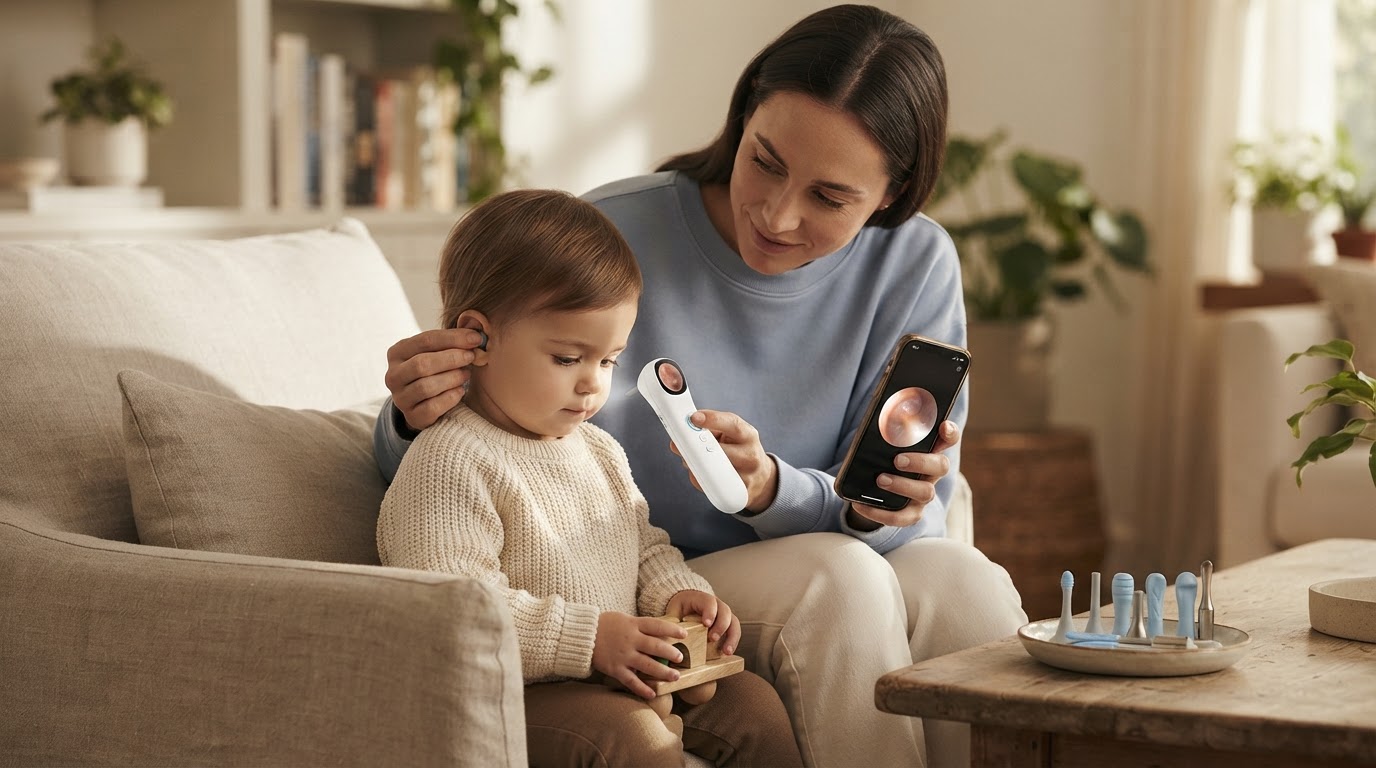
Is a Smart Ear Camera safe for toddler ear exams?
 Maya ChenContributing Editor
October 10, 2026 — While a digital ear scope for toddlers provides high-resolution visual access to the tympanic membrane, its safety depends entirely on the presence of a protective speculum and the child's ability to remain stationary during the exam.
The conventional wisdom says that at-home digital otoscopy is a revolutionary tool for early detection of middle ear infections, which affect approximately 75% of children before age three. Parents are increasingly turning to the Smart Ear Camera to bridge the gap between noticing a fever and securing a pediatric appointment. However, the technical feasibility of seeing the eardrum does not equate to the clinical ability to diagnose a condition without professional training.
When should you avoid using a digital ear scope for toddlers?
You must avoid using a digital ear scope if the child has ear tubes, visible crusting, or any fluid discharge from the canal. Here's the part nobody talks about: inserting a camera into an inflamed ear canal can cause significant pain and potential secondary injury if the device lacks a physical depth stop. Tylenol’s SmartCheck guidelines explicitly state that parents must confirm the absence of ear canal swelling or blockages before attempting a digital exam. If these conditions are ignored, the risk of pushing debris further into the canal or irritating an existing infection outweighs the benefit of the visual data. Furthermore, a wireless ear endoscope for toddlers requires a stable connection; lag in the video feed can lead to over-insertion if the parent moves the device faster than the screen updates.
Does a digital image replace a physical pediatric exam?
No, a digital image captured by a parent serves only as a supplemental data point and cannot replace the pneumatic otoscopy performed by a clinician. Run the math: a standard digital scope provides a 2D image, but diagnosing Otitis Media often requires assessing the mobility of the eardrum, a 3D physical response to air pressure that home cameras cannot measure. While devices like the Deebo Sprinkles Scout Otoscope allow parents to spot symptoms before calling a doctor, they do not provide the diagnostic certainty of a medical-grade tool. I’ll change my mind when these consumer devices integrate AI-driven pressure sensors that can objectively measure tympanic membrane compliance. Until then, the smart ear camera remains a monitoring tool for visual changes rather than a definitive diagnostic solution.
Quick answers
Q: Can a digital ear scope be used on a child with ear tubes? A: No, manufacturers like Tylenol specify that their SmartCheck device should never be used if ear tubes are present. The risk of interfering with the surgical placement of the tube makes home otoscopy unsafe in these specific cases.
Q: What is the primary safety feature to look for in a toddler ear camera? A: The most critical safety feature is a soft, food-grade silicone speculum or a physical guard, such as those found on the Safety 1st Ear Otoscope. These components prevent the camera tip from making contact with the sensitive tympanic membrane.
Q: How does a visual ear picker differ from a diagnostic ear camera? A: A visual ear picker is primarily designed for wax removal and often lacks the specialized lenses required for deep-canal focus. For health monitoring, a dedicated digital ear scope for toddlers is preferred as it is engineered to view the eardrum rather than just the outer canal.
Learn more about Smart Ear Camera at https://smartearcamera.com.
Sources
- How To Use SmartCheck® - Tylenol
- Deebo Sprinkles Scout Otoscope | At-Home Ear Checker
- Introducing SmartCheck From Children's Tylenol Digital Ear ...