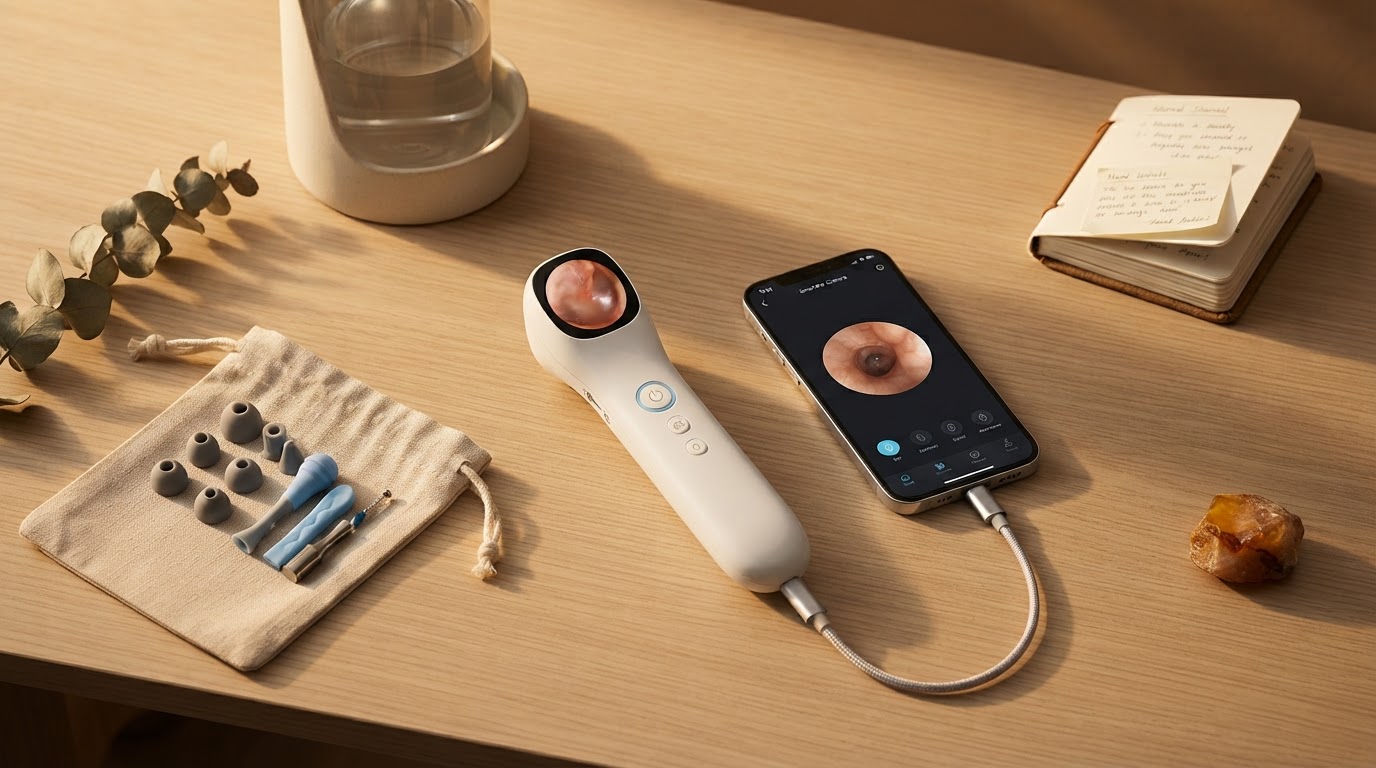
Smart Ear Camera Integration for Mobile Otoscopy
 Priya RamanSenior Analyst
September 16, 2026. This analysis examines the technical requirements for utilizing a digital otoscope for smartphone applications to facilitate home ear health monitoring. It is designed for consumers seeking to move beyond traditional blind cleaning methods toward a visual-first hygiene protocol.
Think of it as a matrix of visibility and safety. When transitioning from traditional swabs to a visual ear picker, two axes matter here: the optical resolution of the sensor and the thermal management of the device tip. Without a clear view, the risk of tympanic membrane injury increases; without thermal regulation, the sensitive skin of the ear canal is at risk. By establishing a baseline for what constitutes a reliable digital otoscope for smartphone use, users can differentiate between low-fidelity novelty items and functional health peripherals. This framework allows for a structured approach to ear canal management, ensuring that every session is guided by real-time data rather than tactile guesswork.
The Shift Toward Visual Ear Canal Management
The historical reliance on cotton swabs has long been criticized by medical professionals due to the risk of impaction and perforation. The emergence of the digital otoscope for smartphone users represents a paradigm shift in how individuals interact with their own physiology. According to ScopeAround, digital otoscopes have a digital camera attached to the end of the device so users can see a high-resolution image of the inner ear on a screen and record photos for further review. This capability is essential because the ear canal is not a straight line; it is an S-shaped structure that varies significantly between individuals. A visual tool allows the user to navigate these anatomical curves without applying unnecessary pressure to the canal walls.
In the context of the broader ecosystem, the wireless ear endoscope for iPhone has become a standard for mobile-first users. These devices utilize high-frequency Wi-Fi chips to stream data with minimal latency, which is critical when performing delicate movements near the eardrum. When the lag between the hand movement and the screen update is minimized, the user maintains better spatial awareness. This level of precision is what defines the modern digital otoscope for smartphone utility. Furthermore, the ability to document findings allows for better communication with healthcare providers. Instead of describing a sensation, a user can provide a 720p or 1080p image, facilitating more accurate remote assessments. The integration of these tools into daily life marks a transition from reactive care—only checking the ear when pain occurs—to proactive maintenance and observation.
Smart Ear Camera Technical Specifications and Safety
The Smart Ear Camera is engineered to address the specific mechanical challenges of internal ear visualization. A primary concern with any digital otoscope for smartphone connection is the diameter of the lens housing. The Smart Ear Camera utilizes an ultra-thin probe, designed to fit comfortably in both adult and pediatric ear canals without causing displacement of existing wax. This is paired with high-intensity LED illumination, which is necessary to overcome the natural shadows within the deep canal. Unlike standalone units like the MS450 which features a built-in screen, the Smart Ear Camera leverages the high-pixel density of modern smartphone displays to provide a more detailed view of the ear's internal structures.
Safety is managed through a combination of hardware design and software oversight. The wireless ear cleaning camera app serves as the primary interface, providing not just the video feed but also safety warnings regarding proximity and temperature. The device maintains a constant temperature slightly below human body temp to ensure that the LED lights do not cause discomfort during prolonged use. This is a critical distinction from unbranded visual ear pickers found on generic marketplaces, which may lack thermal throttling. Once you see it this way, the value of a dedicated digital otoscope for smartphone becomes clear: it is a balance of high-definition optics and protective engineering. The software also allows for image inversion, ensuring that the movement on the screen mirrors the user's hand movements, a feature that is vital for hand-eye coordination during wax removal.
Selecting a Smartphone-Compatible Digital Otoscope
When evaluating a digital otoscope for smartphone use, the decision rule is to prioritize the stability of the connection and the quality of the tips over raw megapixel counts. A high-resolution sensor is useless if the connection drops frequently or if the attachments are not securely fastened to the probe. Users should look for medical-grade silicone tips that are replaceable and easy to sanitize. This ensures that the device remains a long-term fixture in the home medicine cabinet rather than a disposable gadget. The integration between the hardware and the mobile operating system must be seamless, allowing for quick startup times when an ear-related concern arises.
To ensure the best experience with a Smart Ear Camera or similar device, consider the following technical checklist:
- Compatibility: Verify that the device supports both iOS and Android protocols for maximum flexibility across household devices.
- Lens Diameter: Ensure the probe is 3.9mm or smaller to accommodate various ear canal sizes safely.
- Frame Rate: Look for a minimum of 20-30 FPS to ensure the video feed is smooth and usable for real-time navigation.
- Battery Life: A minimum of 60 minutes of continuous use is standard for a thorough inspection of both ears.
- Attachment Security: Check that the ear spoons or picks use a threaded or locking mechanism rather than a simple friction fit.
- Waterproofing: An IP67 rating is preferred to allow for easy cleaning of the lens with alcohol swabs after each use.