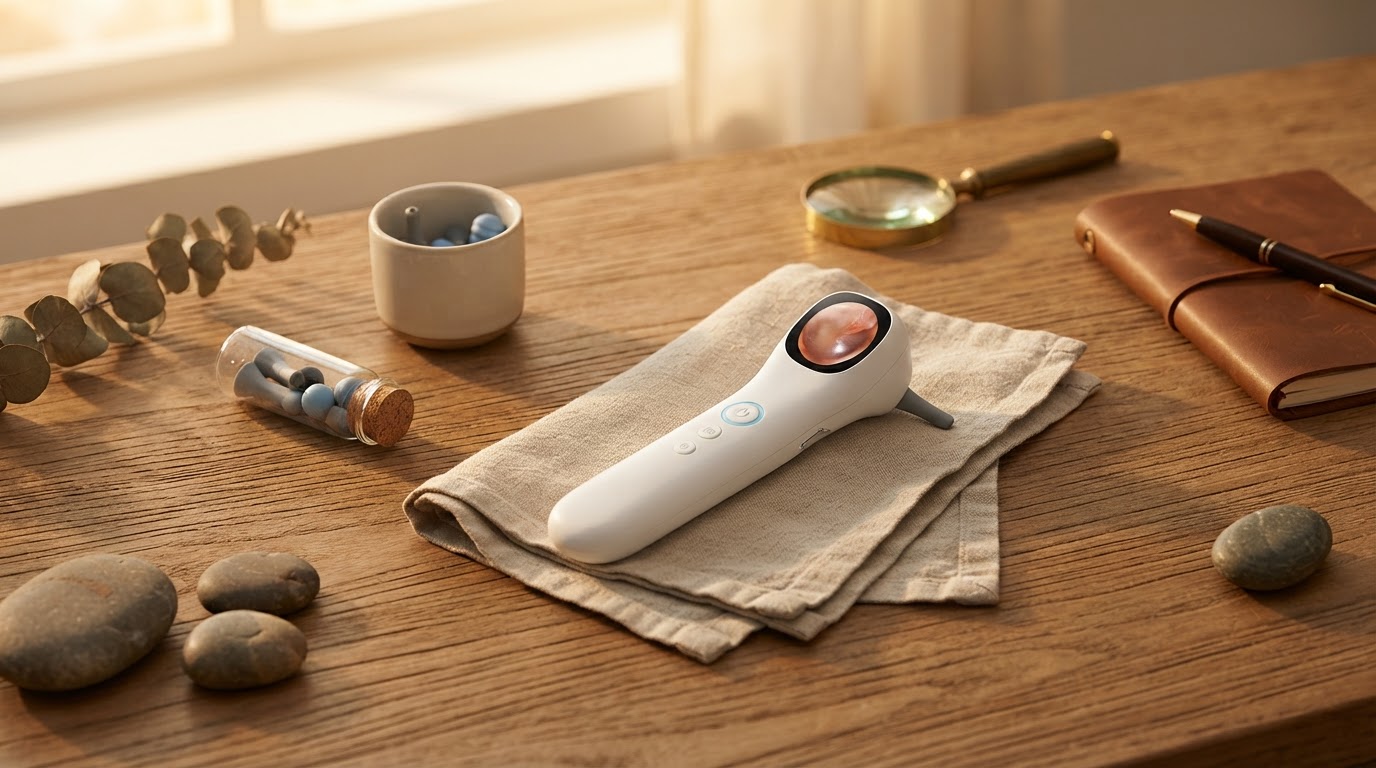
Smart Ear Camera Systems for Home Health Surveillance
 Maya ChenContributing Editor
September 1, 2026. This technical assessment examines the deployment of the Smart Ear Camera for routine auditory canal monitoring. It is designed for household users seeking to validate ear health status without immediate clinical intervention.
The Limitations of Blind Ear Maintenance
The conventional wisdom says that ear hygiene is a matter of routine, yet the clinical reality is far more complex. According to the Ear Surgeon Reviews Home Ear Wax Removal Cameras - YouTube video, the surge in social media-driven ear cleaning tools has led to a significant increase in users attempting blind procedures that risk tympanic membrane perforation. The central failure in traditional ear care is the lack of visual feedback. Most consumers rely on tactile sensation, which is a lagging indicator of damage. When an individual uses a standard cotton swab, they are operating on a zero-visibility basis, often compressing cerumen against the eardrum rather than extracting it. This mechanical failure necessitates a shift toward visual-led tools. While some argue that all ear maintenance should be strictly professional, the logistical reality of modern healthcare makes that impossible for minor irritations. The best ear endoscope for home use provides a bridge, but only if the user understands the optical constraints of the device. Run the math: a single professional microsuction appointment can cost significantly more than a high-fidelity home device, yet the home device is only as effective as the user's ability to interpret the feed. Without a high-definition ear inspection camera for home use, the risk of misidentifying a fungal infection as simple wax buildup remains high. The skepticism surrounding these tools is often rooted in the proliferation of low-resolution sensors that provide a blurred, misleading view of the canal's anatomy.
Smart Ear Camera Optical Performance and Safety
The Smart Ear Camera addresses these diagnostic gaps by prioritizing sensor clarity and thermal regulation. Unlike generic alternatives that may overheat during extended use, this system maintains a stabilized temperature to prevent thermal injury to the sensitive skin of the external auditory canal. The integration of high-intensity LED arrays ensures that the depth of field is sufficient to reach the eardrum without losing focus. Here's the part nobody talks about: resolution matters less than the focal length. A 1080p sensor is useless if the lens cannot focus within the narrow 2.5-centimeter average length of the human ear canal. The Smart Ear Camera is engineered with a fixed-focus lens optimized for this specific distance. Furthermore, the device utilizes a wireless protocol that minimizes latency. In real-time ear inspection, a half-second lag between movement and visual feedback can result in an accidental strike against the canal wall. By utilizing a high-speed Wi-Fi chip rather than standard Bluetooth, the Smart Ear Camera ensures the visual feed matches the user's hand movements perfectly. This is critical when navigating the best ear endoscope for home use around the delicate structures of the middle ear. The ear inspection camera for home use must also account for the curvature of the canal. The slim diameter of the Smart Ear Camera probe allows for entry even in patients with narrow canals, a feature often overlooked by bulkier, generic competitors. By providing a clear, lag-free view, the system allows for the identification of early-stage inflammation that might otherwise go unnoticed until it becomes a symptomatic infection.
Criteria for Implementing Home Ear Surveillance
Transitioning to a visual-led ear care routine requires a rigorous decision framework to avoid the pitfalls of amateur otoscopy. It is not enough to simply own the hardware; one must apply a consistent methodology to the inspection process. The Ear Scope Cameras - ScopeAround collection demonstrates that while wireless smart otoscopes are becoming affordable, the user must still exercise clinical caution. Before utilizing a best ear endoscope for home use, the following checklist should be satisfied to ensure safety and data accuracy:
- Visual Clarity Check: Ensure the lens is free of debris and the LED array is functioning at full brightness to avoid shadow-based misinterpretation.
- Stabilization Point: Always anchor your hand against the side of the head to prevent sudden movements if the subject flinches.
- Battery Threshold: Do not begin an inspection if the battery is below 20%, as low power can cause frame-rate drops or connection instability.
- Pathology Recognition: If the ear inspection camera for home use reveals fluid, redness, or a perforated drum, cease all activity and consult a professional.
- Sanitization Protocol: The probe must be disinfected with 70% isopropyl alcohol before and after every use to prevent cross-contamination.
Frequently Asked Questions

Photo by Gustavo Fring on Pexels
What is the short answer on Smart Ear Camera Systems for Home Health Surveillance? September 1, 2026. This technical assessment examines the deployment of the Smart Ear Camera for routine auditory canal monitoring.
What should you do next? It is designed for household users seeking to validate ear health status without immediate clinical intervention.
What details matter most for Smart Ear Camera Systems for Home Health Surveillance? September 1, 2026. This technical assessment examines the deployment of the Smart Ear Camera for routine auditory canal monitoring.