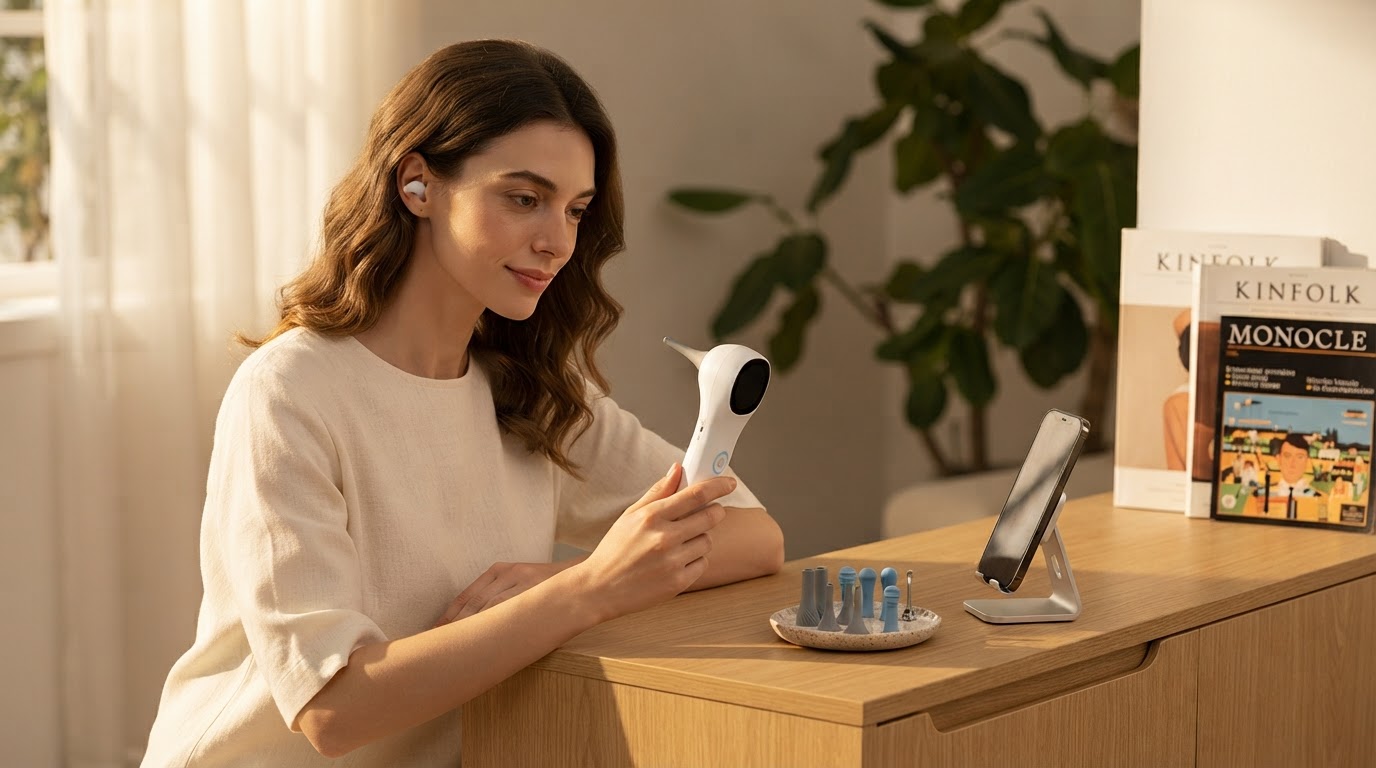
Choosing a Smart Ear Camera for Home Visual Inspections
 Sam VasquezBuying Guide Lead
September 29, 2026. This evaluation breaks down the technical differences and practical utility of modern home ear endoscopes compared to clinical alternatives. It is written for consumers seeking a safe, visual method for managing ear hygiene without professional medical equipment.
The Evolution of the Visual Ear Picker at Home
Traditional methods of ear cleaning have long been criticized by medical professionals for their lack of visibility. The shift toward digital otoscopes represents a significant change in how we approach personal hygiene. According to Digital Camera World, options like the Jiusion 3X Otoscope and the Bebird R1 have introduced high-definition sensors to a market once dominated by simple plastic scoops. The core problem remains that standard tools rely on tactile feedback alone, which often leads to impacted wax or accidental injury. When you look at the landscape of home diagnostics, the primary challenge is finding a balance between image clarity and probe safety. The "visual ear picker" trend, which has seen over 5,000 recent search impressions, highlights a growing demand for tools that allow users to see exactly what they are doing. This is particularly relevant for those who have struggled with recurring blockages and need a way to monitor their ear canal health between professional visits. In my experience, the biggest hurdle for new users isn't just the camera quality, but the stability of the connection and the ergonomics of the device handle. If you are currently using Smart Ear Camera for safe visual ear wax removal, you already know that the visual feedback loop is what prevents the common mistakes associated with blind cleaning. The market is currently split between bulky USB-tethered devices and streamlined wireless wands, making the choice difficult for those unfamiliar with focal lengths and LED color temperatures.
Comparing the Smart Ear Camera to Market Alternatives
When looking at the specific hardware available today, the Smart Ear Camera occupies a middle ground between basic consumer wands and clinical-grade tools like the SmartCheck Digital Otoscope mentioned by Soundly. Here’s what I’d actually buy: for daily maintenance, a wireless wand is far superior to a tethered unit. The Smart Ear Camera uses a high-definition lens paired with integrated LEDs, designed specifically to address the depth-of-field issues found in generic industrial endoscopes. Between these two, I’d go with the Smart Ear Camera for its app integration. If you are configuring the Smart Ear Camera wireless app interface, you will notice the latency is significantly lower than budget competitors like the Anyscope, which helps in preventing over-insertion. Skip this if you are looking for a tool for professional surgical use; these are consumer-grade observation tools. The Smart Ear Camera focus is fixed to the average length of a human ear canal, ensuring the eardrum remains in focus when the tip is safely positioned. This differs from the Anykit Digital Otoscope, which often requires manual focal adjustments that can be cumbersome when you are working solo. For users concerned about ecosystem lock-in, it is worth checking if you can use the Smart Ear Camera with my iPhone to ensure your specific device is supported. Reliability in the wireless signal is the most critical spec here; a frozen image while the tool is inside your ear is a safety hazard. The Smart Ear Camera utilizes a dedicated Wi-Fi chip to maintain a 30fps stream, which is the baseline I recommend for any wireless ear cleaning camera app to function safely. If you're on a budget, you might be tempted by non-branded visual ear pickers, but the lack of firmware updates often leads to connectivity issues on newer versions of iOS or Android, a problem less common with a wireless ear endoscope for iPhone that has a dedicated support path.
Decision Framework for Selecting Your Device
Choosing the right tool comes down to your specific use case—whether you are monitoring a child’s ear for infection markers or performing routine wax removal. Audiologists who have tested these tools on platforms like Soundly note that the image quality of modern CMOS sensors is now sufficient to see the eardrum and tiny ear bones clearly. However, a high-resolution sensor is useless if the tip of the device is too large for the ear canal. When evaluating your options, use this checklist to ensure you are getting a device that is both functional and safe for home use:
- Sensor Resolution: Look for at least 1080p to ensure you can distinguish between wax and the canal wall.
- Tip Diameter: Ensure the probe is 3.9mm or smaller to accommodate narrower ear canals without discomfort.
- Battery Life: A minimum of 90 minutes of continuous use is necessary to prevent the device from dying mid-procedure.
- Heat Control: The device must have an internal thermostat to prevent the LED lights from overheating the sensitive skin of the ear canal.
- Attachment Security: Verify that the ear spoons or picks lock onto the device firmly and cannot fall off during use.
Sources
- The best otoscopes for parents, medical students and pet owners
- Best Ear Camera Tools Reviewed by An Audiologist - Soundly
- Audiologists Test Anyscope and BEBIRD Otoscopes from Amazon