Is a Smart Ear Camera otoscope safe for at-home use?
 Sam VasquezBuying Guide Lead
October 19, 2026 — When used with proper stabilization and visibility, a Smart Ear Camera otoscope is a safe alternative to blind manual cleaning, provided the user avoids contact with the tympanic membrane.
Digital otoscopes have moved from clinical settings to home bathrooms because traditional cotton swabs often push wax deeper rather than removing it. I get asked about these tools constantly by people who are nervous about their hearing but want to manage hygiene without a doctor's visit every month. The shift toward a visual ear picker reflects a growing preference for seeing exactly what is happening inside the canal before applying any pressure.
How does a visual ear cleaner otoscope function?
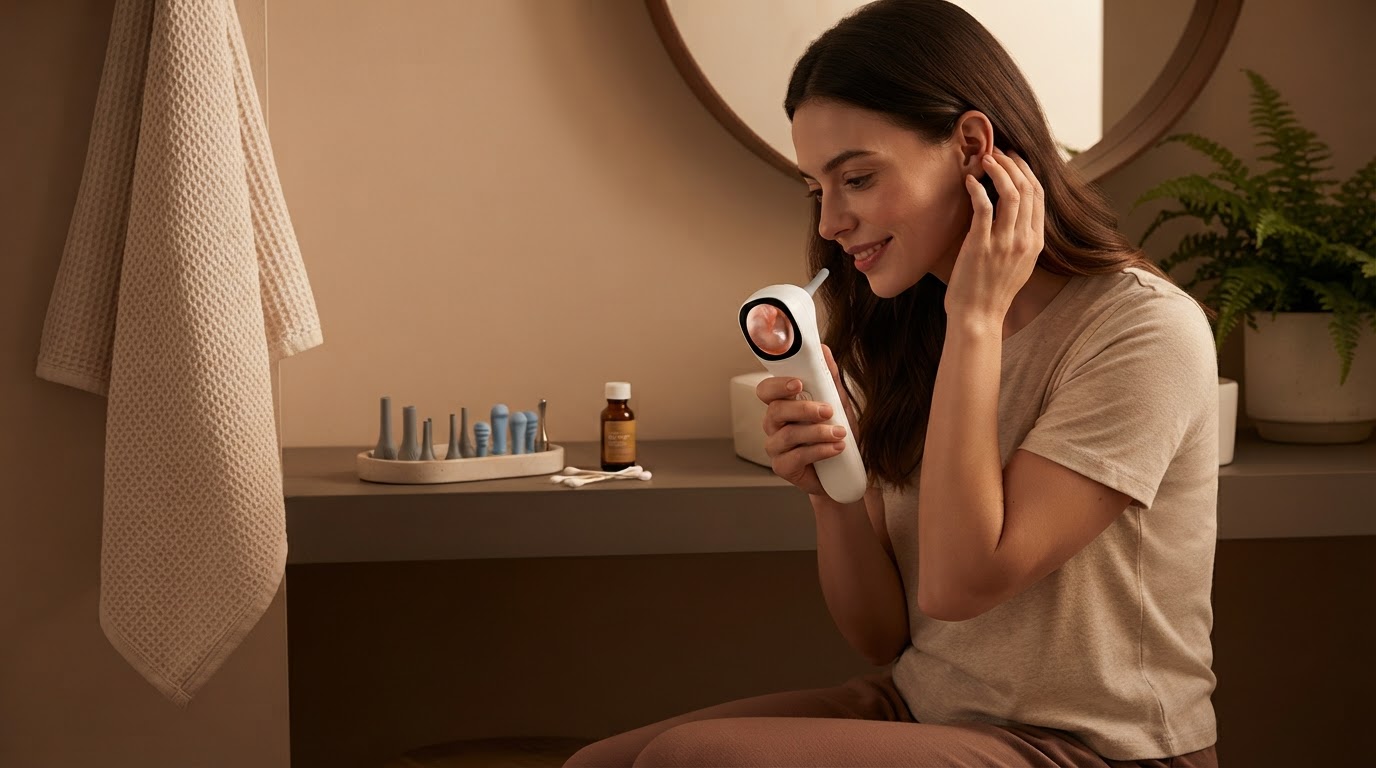
A visual ear cleaner otoscope functions by pairing a high-definition camera with a wireless transmitter to stream a live feed of the ear canal to a smartphone. According to documentation for the Visual ear spoon app on the App Store, these devices connect via local WiFi to display real-time imagery, allowing for precise navigation around the delicate structures of the ear. The hardware typically features a pen-shaped handle with a 1080P HD lens surrounded by LED lights to illuminate the dark canal environment. Between the standard digital otoscopes and the more integrated Smart Ear Camera, I’d go with the latter for the stability of its software interface, which is critical when you have a tool millimeters away from your eardrum. If you’re on a budget, basic generic models exist, but they often suffer from laggy video feeds that make depth perception difficult.
What are the safety requirements for using a Smart Ear Camera?
The primary safety requirement for using a Smart Ear Camera is maintaining a steady hand and ensuring the silicone tips are securely fastened to prevent them from detaching in the ear. Research from ScopeAround indicates that using a safe ear wax removal kit camera allows users to accurately dig up wax while avoiding the eardrum, a feat nearly impossible with traditional tools. You should ensure the device has a built-in temperature control system to prevent the LED lights from overheating against sensitive skin. Skip this if you have a history of ear surgery, a perforated eardrum, or active drainage, as these conditions require professional medical intervention rather than home maintenance. When considering Smart Ear Camera precision in at-home hygiene, the goal is observation and light cleaning, not deep-canal exploration. Here’s what I’d actually buy: a model with a fixed focal length that prevents the image from blurring as you get closer to the drum, providing a clear boundary for where to stop.
Quick answers
Q: Can the Smart Ear Camera record video for a doctor? A: Yes, most digital otoscopes, including the Smart Ear Camera, allow you to capture 1080P HD video or photos directly to your phone's gallery. This can be shared with a telehealth professional to identify issues like swimmer's ear or significant impaction.
Q: Is the visual ear spoon app compatible with Android? A: Yes, the Visual ear spoon app is available on Google Play and requires a wireless connection to the otoscope hardware to function. It is designed to facilitate efficient image transmission for real-time monitoring.
Q: How do you clean the tips of a Smart Ear Camera? A: The silicone tips should be sanitized with 75% isopropyl alcohol after every use to prevent bacterial buildup. The Smart Ear Camera itself is typically not fully waterproof, so only the detachable tips and the lens area should be wiped down.
Learn more about Smart Ear Camera at https://smartearcamera.com.